
Banished by the Past
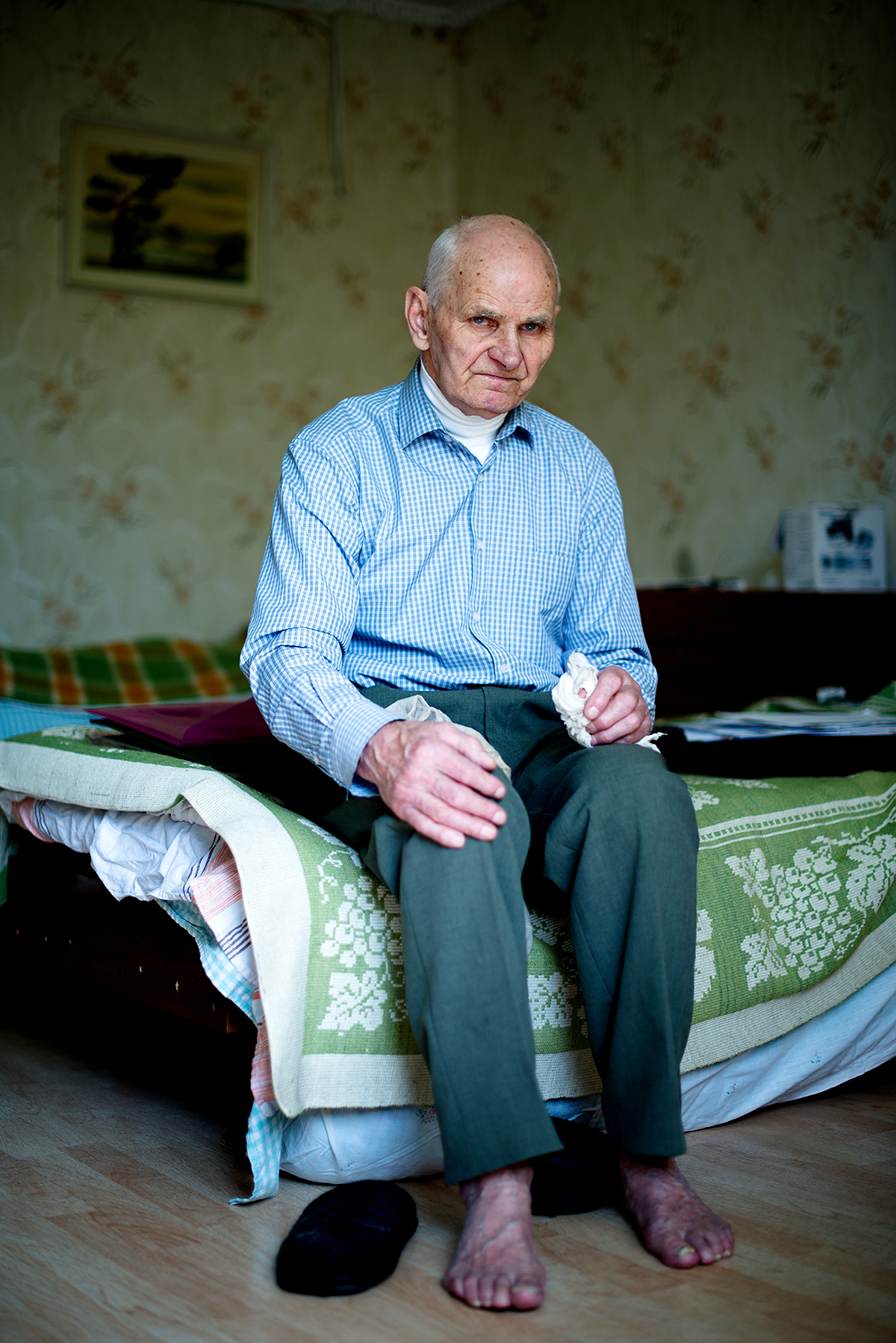 Former exile Vitalis Staugaitis in his bedroom in Kaunas, talking about frostbitten limbs.
How should one explain to a twelve-year-old child that he is a socially dangerous element that has to be eradicated? Vitalis Staugaitis' mother did not know the answer to this question, either. All she felt was that the mass deportation of Lithuanian inhabitants to the outskirts of the USSR would not stop soon. 'At first, they crammed about seventy people into a cattle wagon. They cut a hole in the middle for sanitary purposes. We'd cover ourselves with bed sheets,' sighs Vitalis Staugaits in his compact Kaunas flat; his mother's portrait takes up the largest shelf here.
He is a former deportee that has lived to celebrate his 88th birthday. However, talking about the young days still make his voice quiver.
Half-way into the holidays
'There were rumours about people being taken somewhere by trains, and we thanked the Lord that no one bothers us,' says Vitalis slowly, remembering the 1941 summer of mass deportations. He remembers that it was a warm June and he, having just finished the fifth grade at Eišiškės school, would spend his days playing ball and arranging sun-tanning competitions with friends. At the time, none of the friends could suspect that, in a year, most of them will live in a place where the sun would be completely absent for two months every year.
The deceptive peace did not last long. On the third day of the deportations, while coming back home with a milk can, Vitalis saw a truck in his yard. Vitalis ran to his father's workplace, but he did not find him there and has not seen his father ever since. Vitalis' father was warned about the upcoming arrest and managed to hide, but a local Komsomolets betrayed him and he was shot while trying to escape. The family only learned about this story much later, as at the midnight of June 17 Vitalis, his mother, and two brothers—one of them was under two years old—were transported to Trakai, and then to Lentvaris. There, they were crammed into a cattle wagon together with other deportees. Vitalis' childhood was over before the first half of his fifth summer holidays.
Banishment2
'I cried because there was no food for my little brother. Later on, my mother traded a pillow case for six litres of milk. For twelve days, I would walk those two kilometres and did not taste the milk, not even once. I only thought about the porridge that mother would make for little Darius,' Vitalis covers the tears in his eyes with a tiny handkerchief. Despite the fact that, at the beginning of their life in the Altai Region, their monthly wage was a bucketfull of potatoes, Vitalis' family managed to survive until spring. As the days went warmer, the hope of staying alive grew stronger. 'We were even given fifteen ares of land. We planted carrots, beets, potatoes. In June, the potatoes were grown up, some even started blooming. However, since it had been a year since our deportation, the NKVD came and ordered us to pack our stuff, again,' Vitalis closes his eyes upon finishing the sentence.
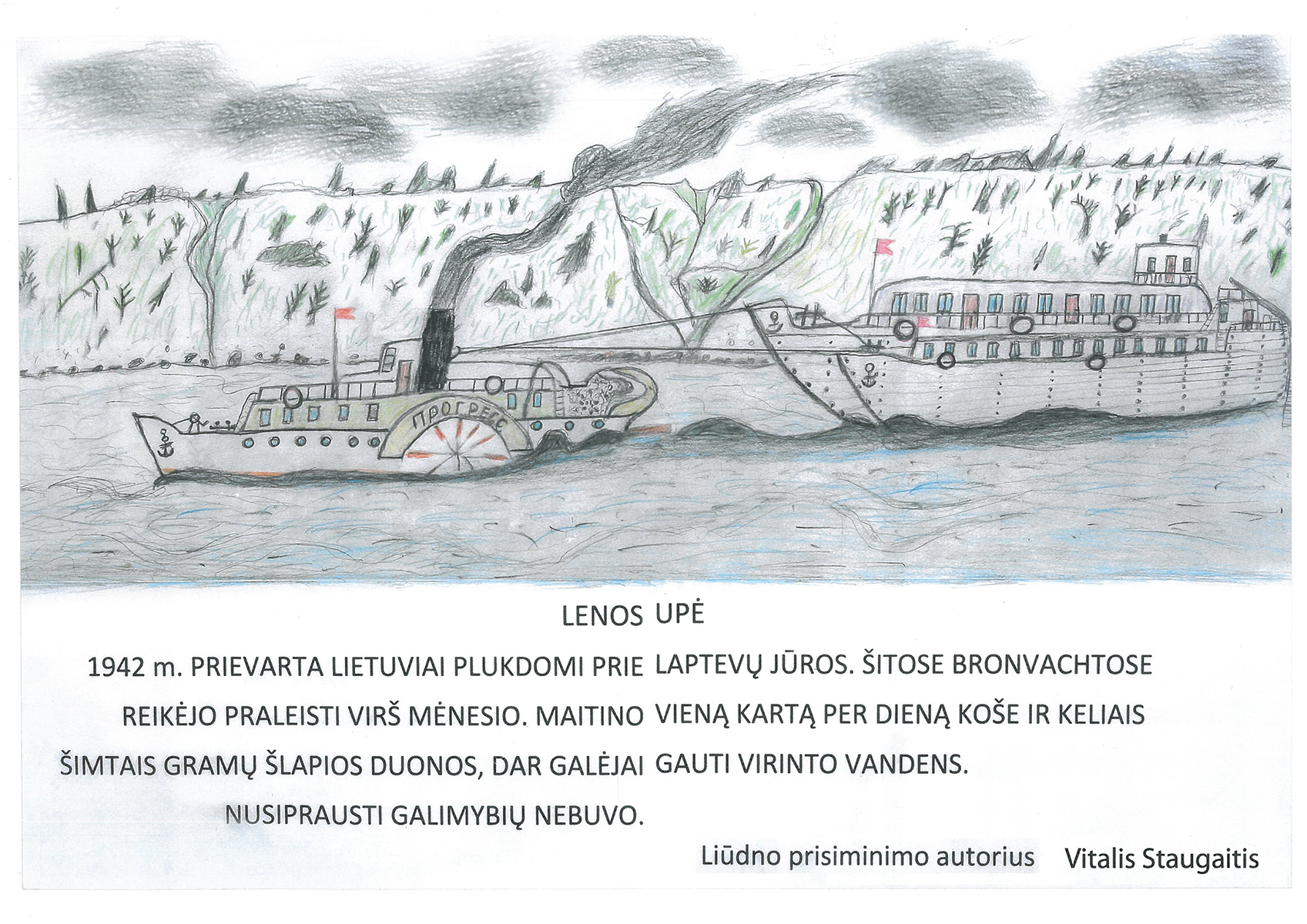 Vitalis Staugaitis drew this to portray the time when exiles had no means of taking photographs. The comment reads: “The Lena River. In 1942, Lithuanians were forcibly brought to the Laptev Sea. We had to spend over a month on these guard ships. We were given porridge and a few hundred grams of wet bread once a day. You could also get some boiled water. There was no place to wash up. Vitalis Staugaitis, author of this sorrowful memory.”
A night of 71 days
The unexpected journey lasted for two and a half months: the deportees were transported by barges, traincars, and polutorkas (open trucks). However, not like during the first time in Lithuania, most of the deportees were relaxed, smiling, and cracking jokes. 'A myth was spread in the Altai Region that the US agreed to take in Lithuanian deportees. The people were ruly, everyone was glad, no one got angry. They thought a better life awaits them,' Vitalis laughs bitterly. As the caravan passed more and more barbed wire fences, the trees grew scarcer and the wind grew stronger, the mood adapted to the landscape. 'When we disembarked on the Trofimovsk Island, children asked their mothers: “Mommy, why is the wind so strong, why is it so cold here?” What could the mothers possibly answer, since we were banished to the 74th parallel? Alaska doesn't see the sun for 65 days a year. We wouldn't see the sun for 71 days a year,' Vitalis sighs heavily. He adds that the first snow in Trofimovsk showed up at the end of summer, but the deportees still had to sleep in the open air—until the construction of the barracks started.
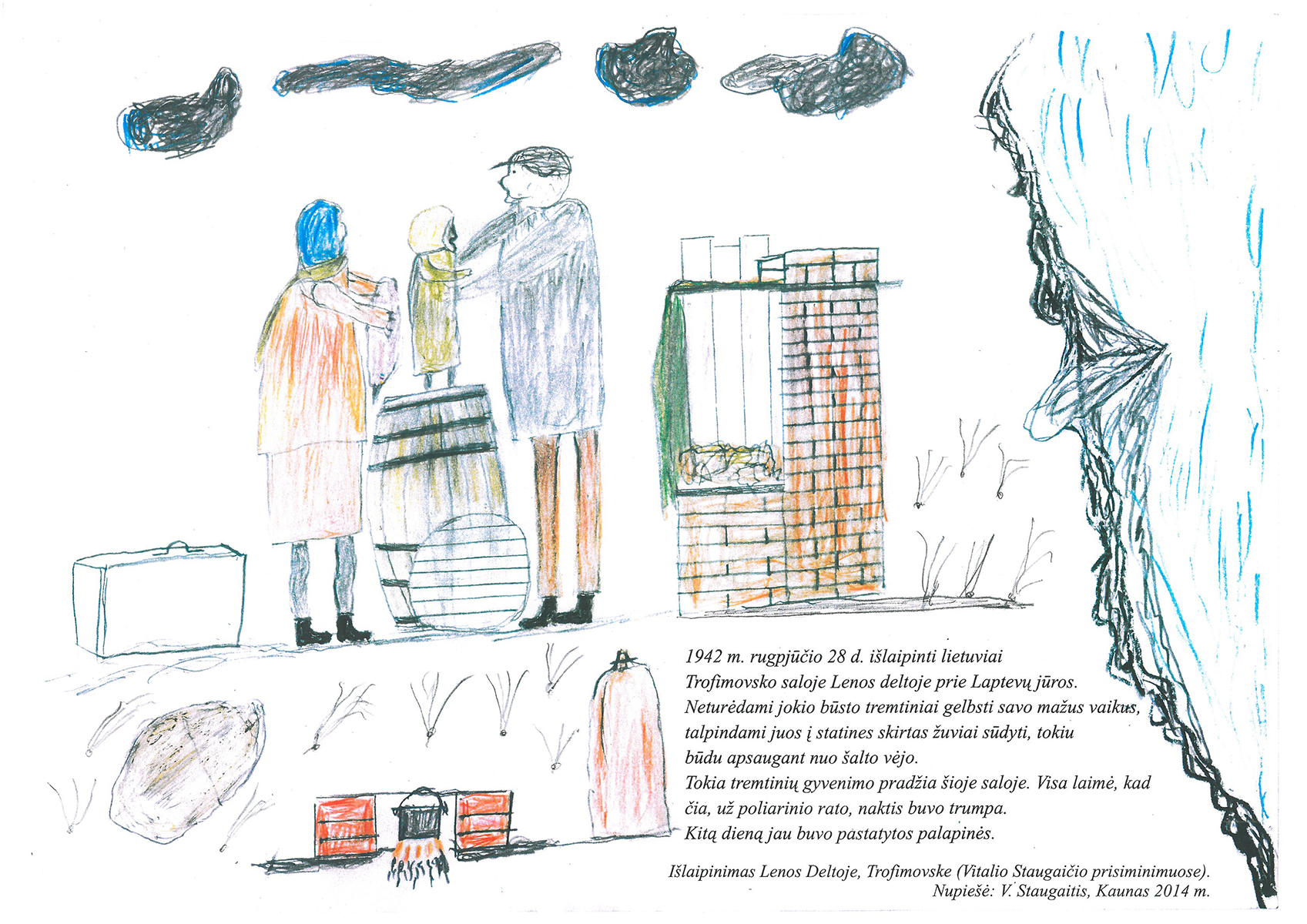 Vitalis Staugaitis drew this to portray the time when exiles had no means of taking photographs. The comment reads: “On August 28th, 1942, Lithuanians disembarked on Trofimovsk Island, located in the Lena Delta by the Laptev Sea. The exiles didn’t have any shelter, so they put their children in barrels intended for pickling fish to protect them from the cold wind. That was the start of exile life on this island. We were lucky that the night here, beyond the Arctic Circle, was short. The next day, the tents were already built. Disembarkment on Trofimovsk Island in the Lena Delta (memories of Vitalis Staugaitis). Author: Staugaitis, Kaunas, 2014.”
You cannot hide from winter
'Old people and little children died first. After them, big families started dying out. There were cases where only one out of nine family members survived,' after this sentence, Vitalis turns silent. The sun disappeared in December, and the deportees would orientate according to the snow and the stars. The working deportees would get 400 grams of butter and 600 grams of sugar per month. The unemployed and the children would get half of that. Due to the lack of vitamins, a scurvy epidemic broke out. 'It would happen that you'd buy white bread, bite into it, and the piece would be covered in blood,' remembers Vitalis. Soon, since the deportees had almost no firewood and water to wash themselves, typhus became common. Most of them were afraid to wake up in the morning, as they knew that their hair, frozen to the barrack wall, would not be the only disturbance: during the night, more lifes would be lost. During the first winter in Trofimovsk, one third of deportees from Lithuania perished.
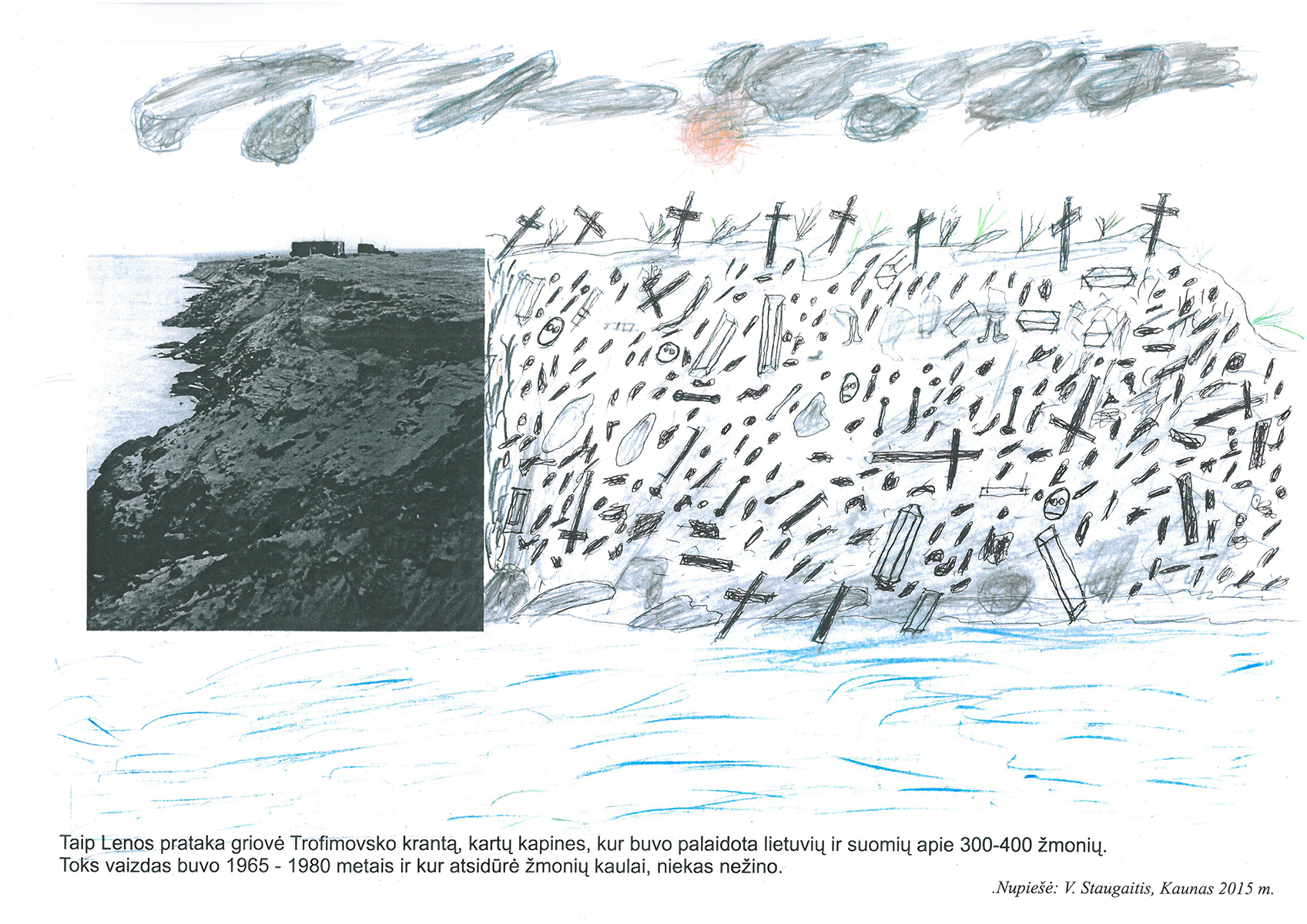 Vitalis Staugaitis drew this to portray the time when exiles had no means of taking photographs. The comment reads: “This is how the Lena canal junction eroded the Trofimovsk shoreline, along with the cemetery where 300-400 Lithuanians and Finns were buried. This is how the place looked in 1965-1980; no one knows where the people’s bones ended up. Drawn by Vitalis Staugaitis, Kaunas, 2015.”
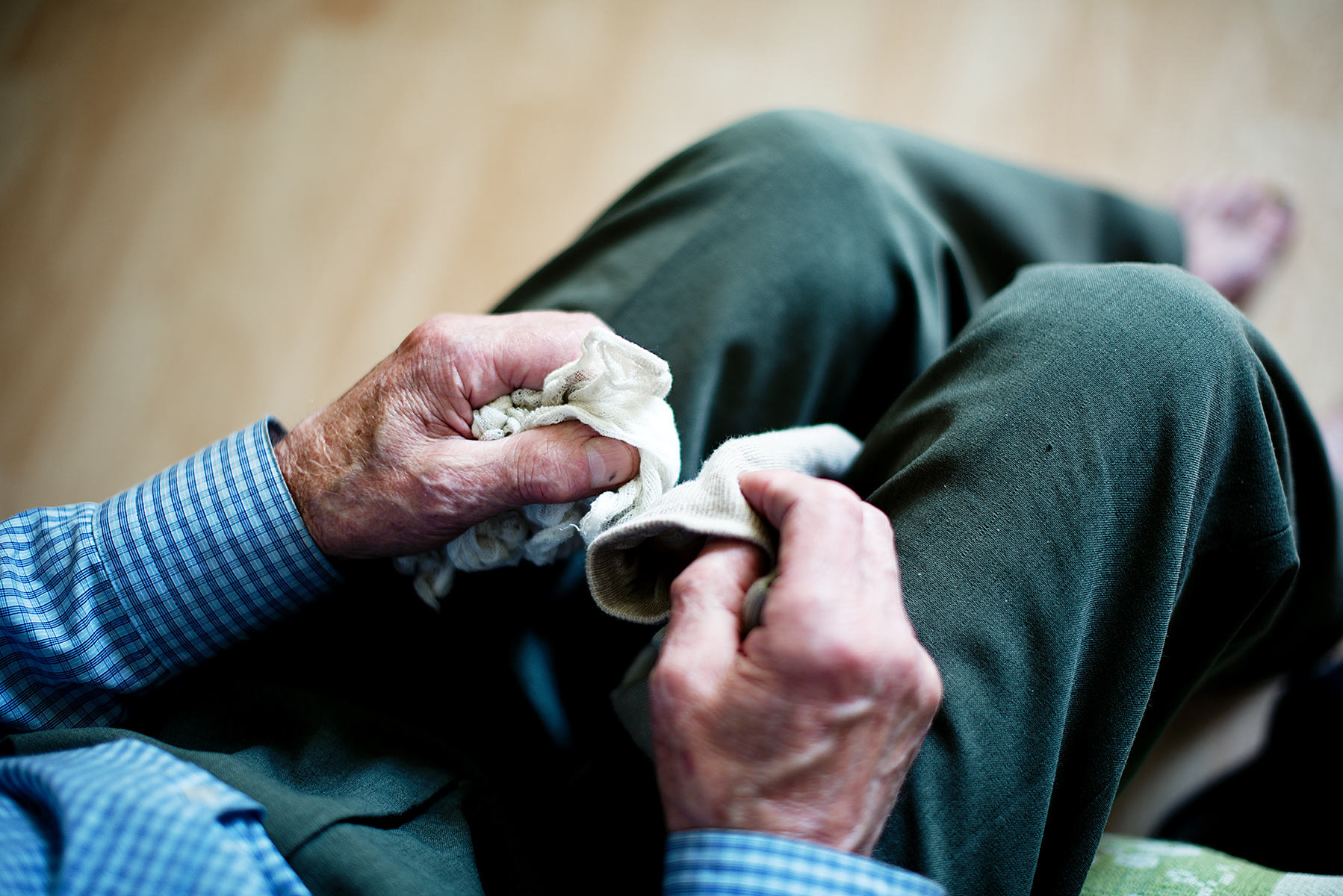 Vitalis’ hands developed frostbite in Siberia.
Despite the ubiquitous cold and death, Vitalis was still a thirteen year old boy. Many would tell him he looks older: that may have been natural to a teenager who saw stacks of cadavers, gnawed by foxes, behind the hospital; or to a teenager who knew that, when a person died, their family would hide the body under blankets to get extra food with their ID. However, Vitalis would secretly dream about having a sleigh, run outside to see Aurora Borealis, miss his father and Lithuanian Christmas, and dream about coming back home.
 A chandelier in Vitalis’ room.
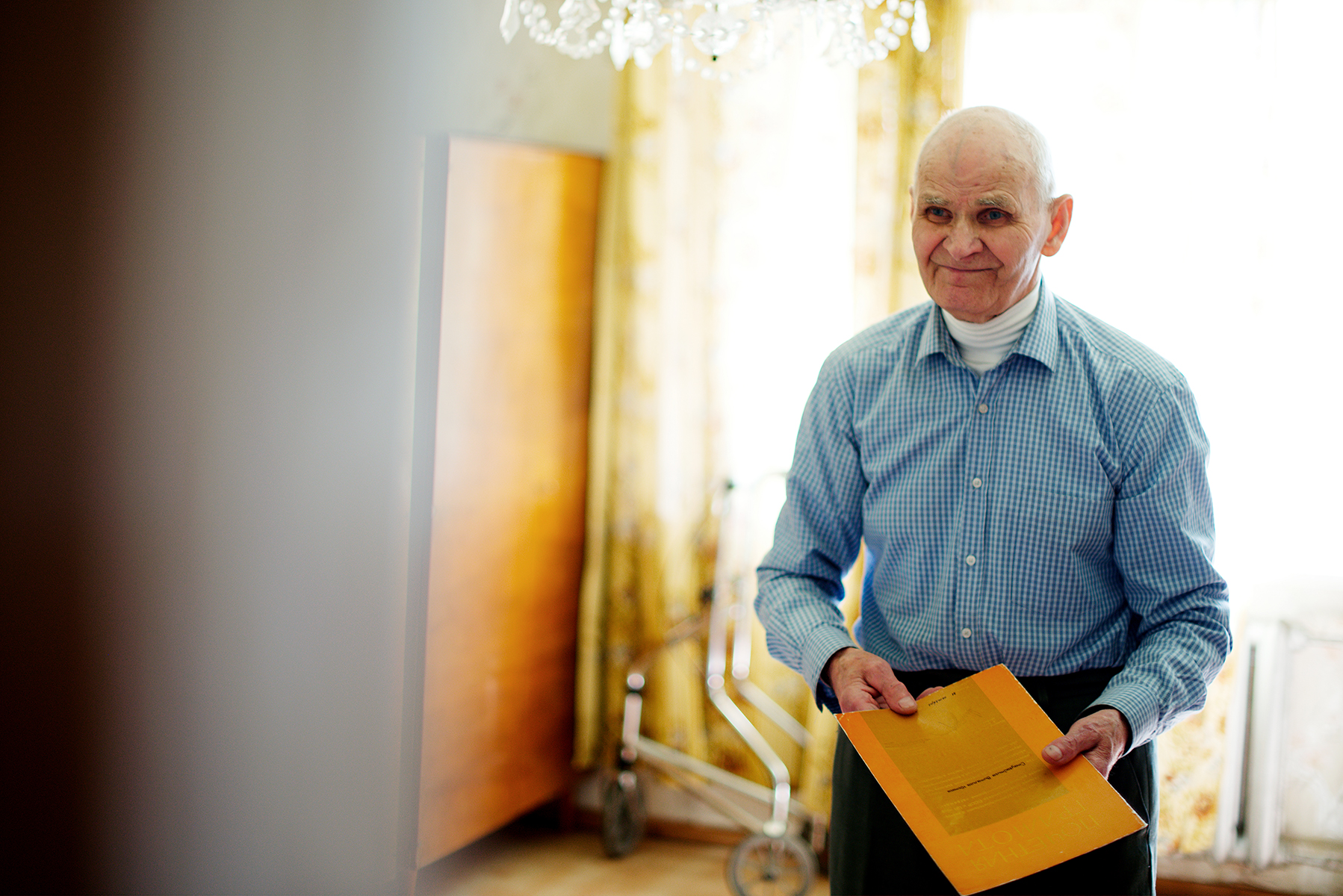 Vitalis Staugaitis showing his commendations in his room in Kaunas.
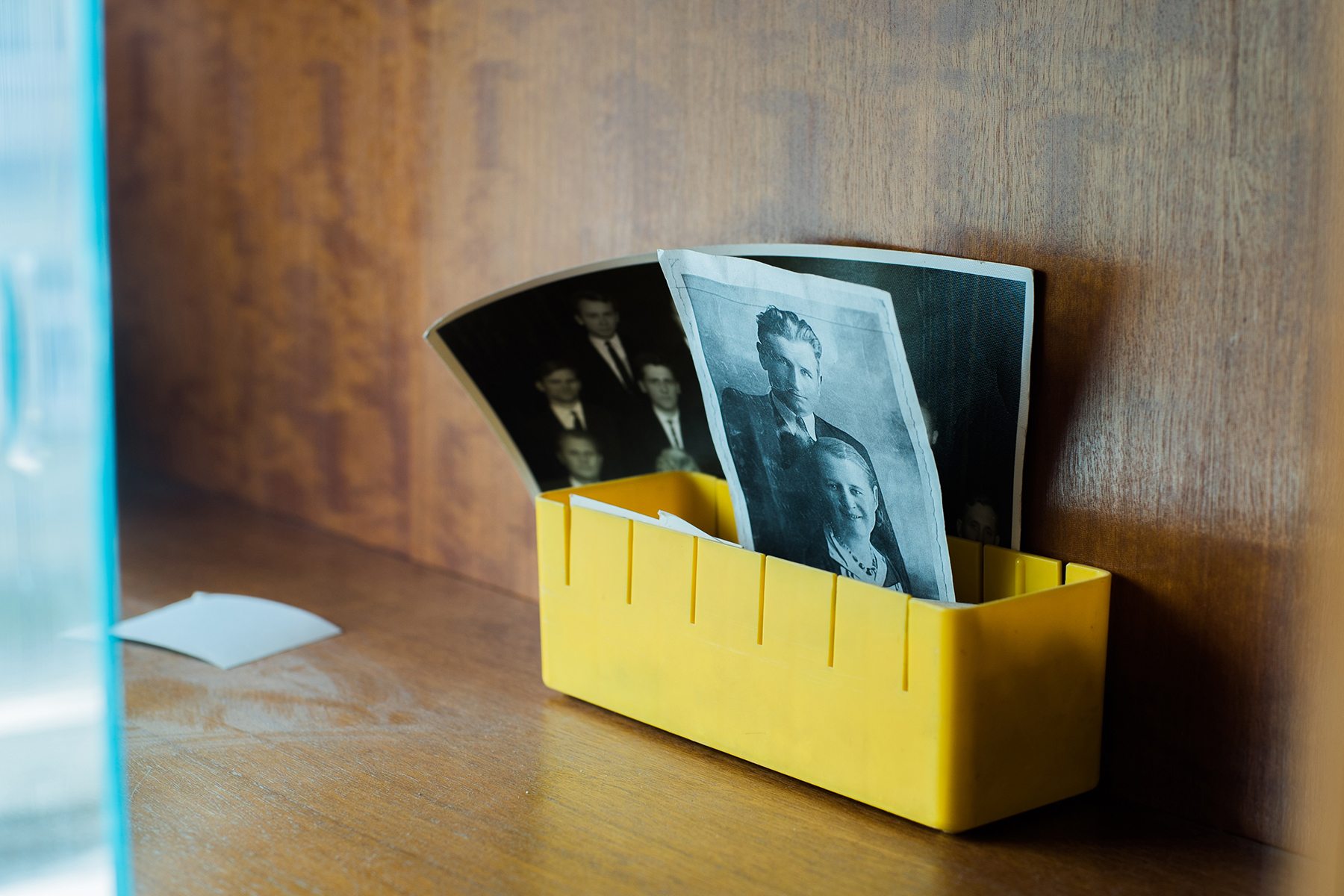 Vitalis’ room.
Cherry memories of home
'I had a cousin who would feed me letters and describe the whole situation in Lithuania. I would always ask her whether cherries are blooming yet, and she would respond that there are apples on trees already,' Vitalis' voice grows warmer with these memories. 'When the evenings came, everyone there would talk about Lithuania. What they would eat, what food they would prepare for the Christmas Eve's, what kind of rolls they'd bake. Some were angry at these talks, they'd say “Why are you taunting us, increasing hunger?” Others really liked those stories,' smiles Vitalis. According to him, when the worst times were over, in time, the deportees adapted to living in unlivable conditions. Some learned to make their own shoes: they would wrap their feet in footwraps, go outside, and pour water on them to turn them into ice. 'Believe it or not, it was warmer that way,' smiles Vitalis. After a while, when there was no fish left around the island, the decision came to liquidate the Trofimovsk settlement. Its inhabitants were removed to Yakutsk, the Tit-Ary Island, and other places where they worked hard up to the very De-Stalinisation. When the latter started, a part of the deportees went home. Then-thirty-years-old Vitalis soon joined them with his mother and two brothers.
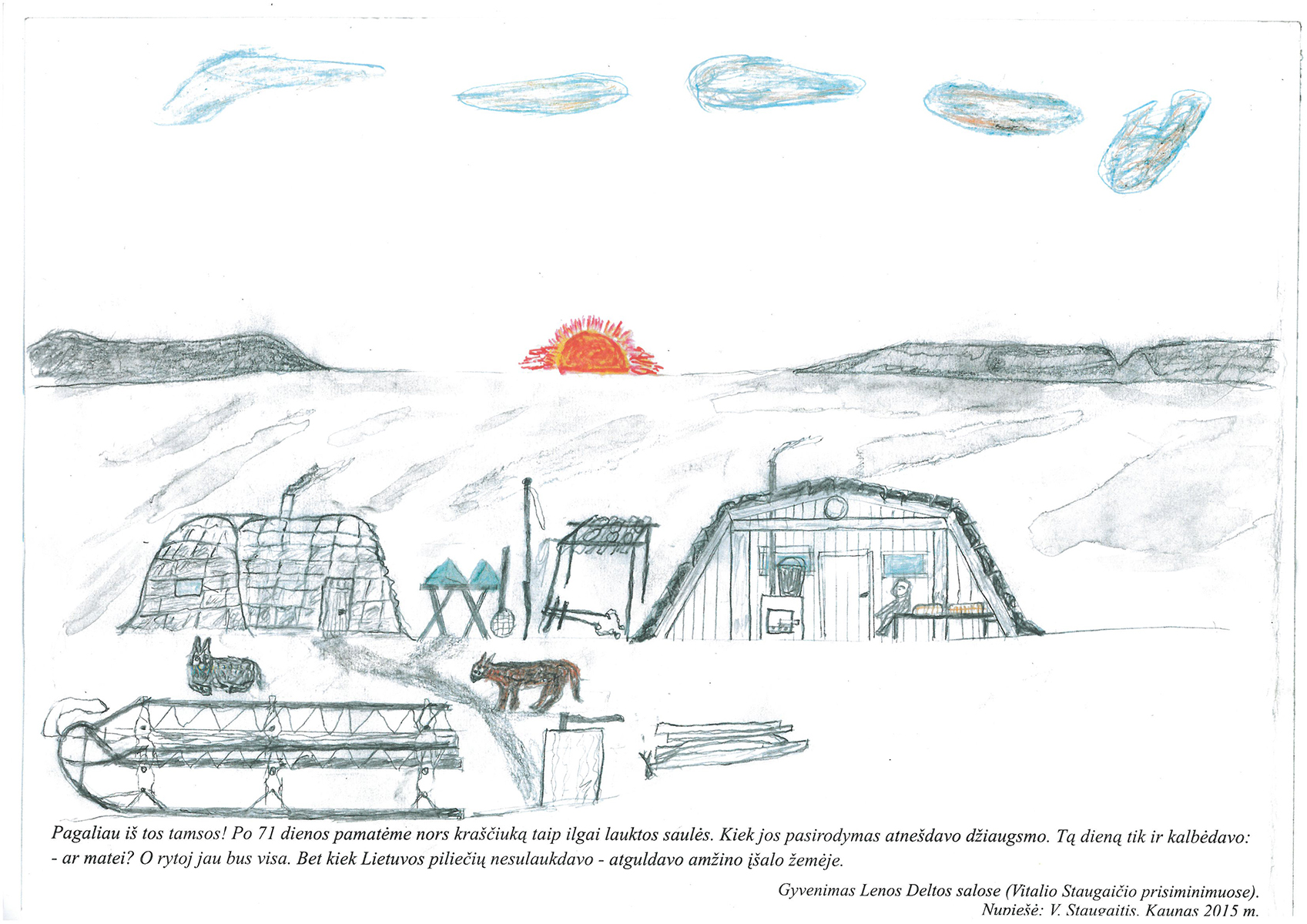 Vitalis Staugaitis drew this to portray the time when exiles had no means of taking photographs. The comment reads: “The darkness is finally over! We got a peek at the long-awaited sun after 71 days. The sun showing up brought us so much happiness. That is all we talked about on that day: “Did you see it? And tomorrow, the whole sun will rise.” But so many Lithuanian citizens never got the chance to see the sun – they were laid to rest in the perennially frozen ground. Life in the Lena Delta islands (memories of Vitalis Staugaitis). Author: Staugaitis, Kaunas, 2015.”
Guilty of survival
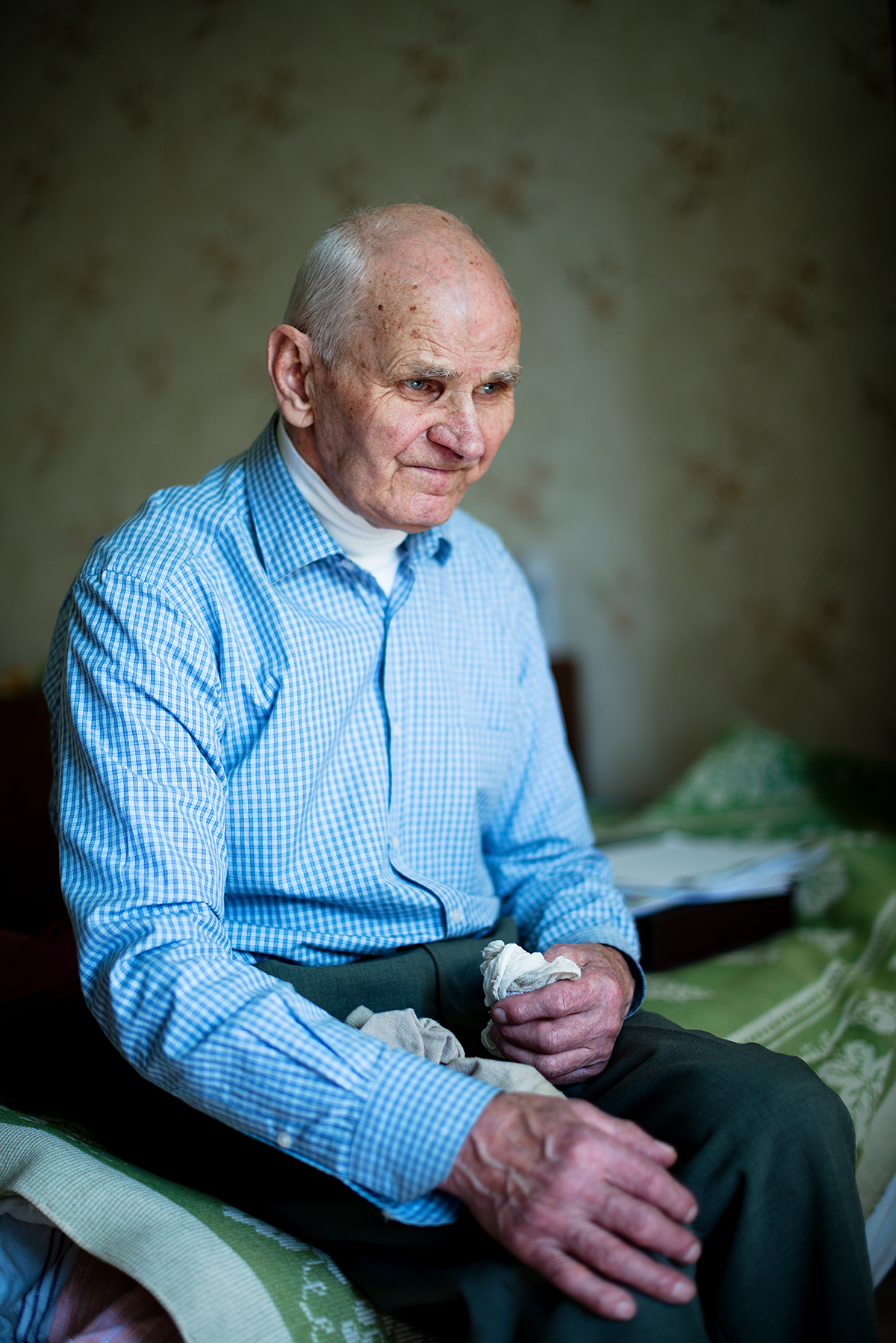 Vitalis Staugaitis in his room in Kaunas.
'Once, when I was already back from my banishment, I was on a trolleybus. I needed to get off at the next stop, but there was a woman standing in front of me. I kept thinking, how I should ask her whether she's getting off. I knew the words, but the tongue just got stuck and wouldn't roll,' shrugs Vitalis. Then, he laughs and says that he remembered his native tongue quite soon after that.
However, even while fully immersed in his new life in Lithuania, Vitalis could not erase Syberia from his memory. 'I keep revisiting them [the places of his youth] in my dreams. I'm walking, it seems that there is nothing there, I'm looking for our barracks, but they're never there. I turn towards the cemetery, but its gone, too. And suddenly, this anxiety overwhelms me, as if I was guilty, as if I was indebted to someone because I survived and because I haven't done anything good for my compatriots to this day,' wrote Vitalis in his book 'Involuntarily at the Delta of the Lena'. When he got tired of his memories, he decided to come back to the Laptev Sea after 37 years. In 1989, together with the Reform Movement of Lithuania, other initiatives sprung up: Rimantas Plėštys organised the first 'Lena'89' expedition to North Yakutia, and Vitalis became a deputy to Plėštys. His team took care to build the first monuments on the Lena delta for the deportees who perished there, and part of the remains of the Syberian deceased were excavated and brought back to Lithuania.
Even after the expedition that partly contributed to making his survival significant, the past did not disappear from his everyday life. He keeps on drawing the scenes from the banishment, depicting people being transported by barges, and colouring the cemetery grey. Almost everything reminds him of Syberia, including a slice of rye bread and the sharpness of fresh snow. The old habits have not gone anywhere, either—instead of tea, Vitalis still sometimes drinks boiled hot water, just like he would in his long-gone youth. When asked whether he would want to forget his experiences, he responds silently: 'There is not a day when I don't remember the North. No, there hasn't been a day. I can't do it. It is impossible for me to do it.'
