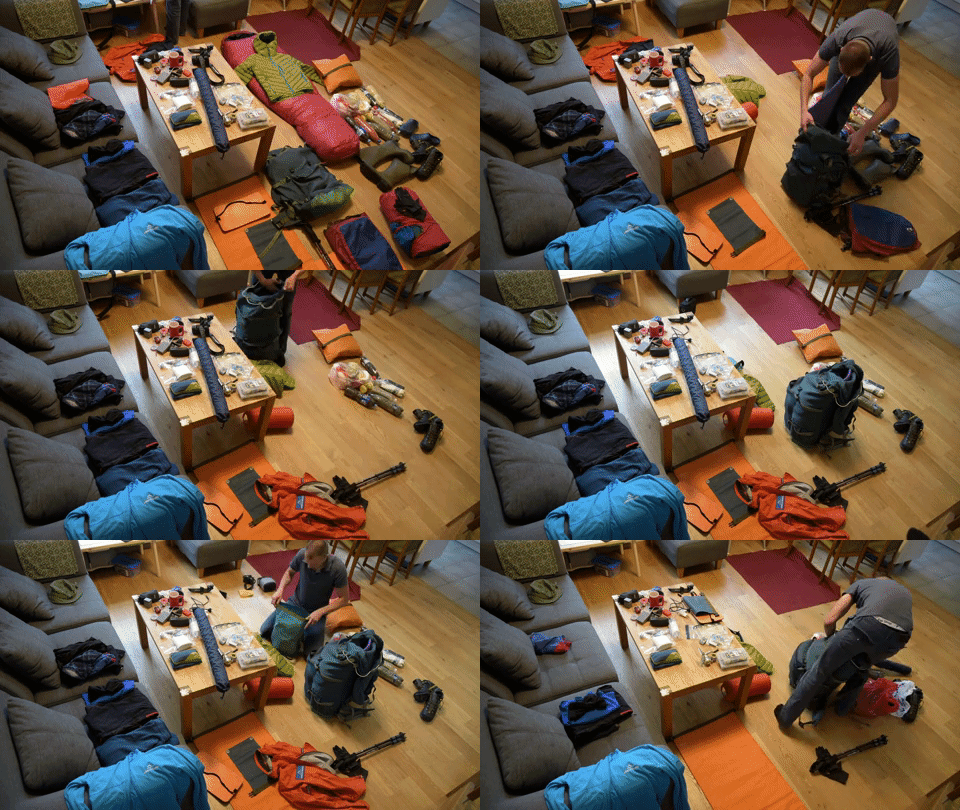
Day 1 (July 1st)
Start of the expedition!
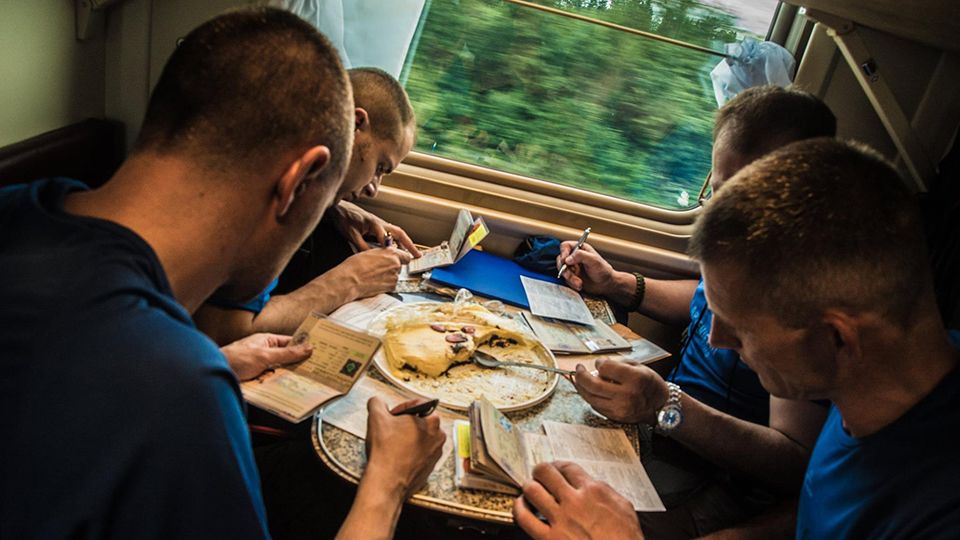
Day 2 (July 2nd)
“In Moscow. Fell dead asleep on the train:) We have 4 hours of free time until we go to the airport. Will probably see the towers of the Kremlin.”
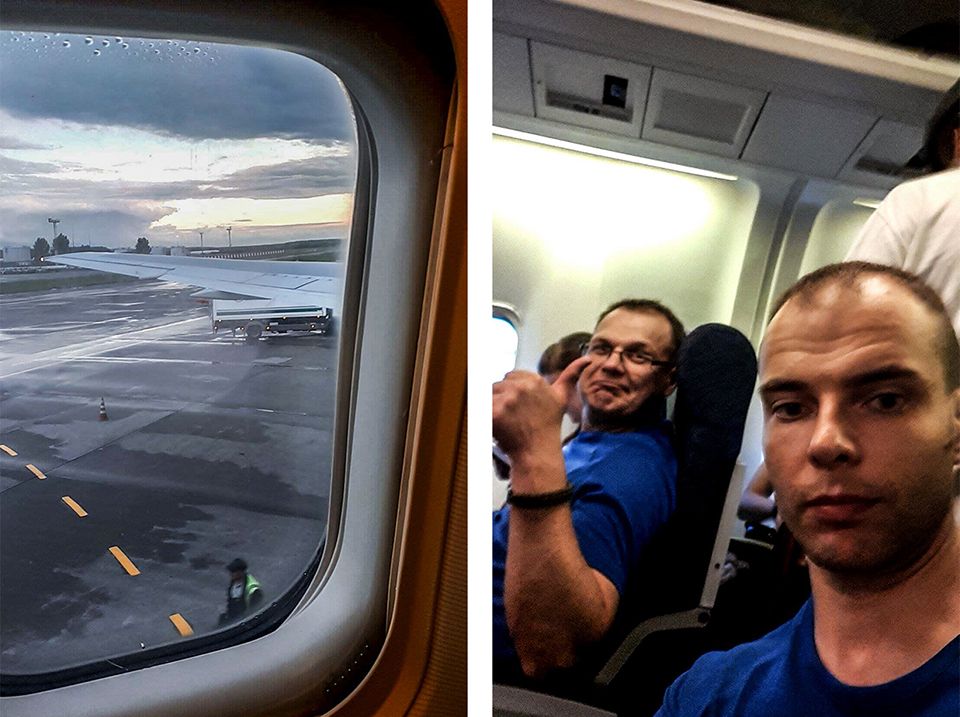
Day 2 (July 2nd)
“The adventures have started. Only I and Darius got on the plane to Yakutsk. The airline made a mistake and overbooked the flight. Vigimantas and Viktoras stayed in Moscow a day longer. We hope to all be together on July 4th and immediately fly to Batagay-Alyta. We also hope that our luggage arrives, because this place is completely chaotic.”
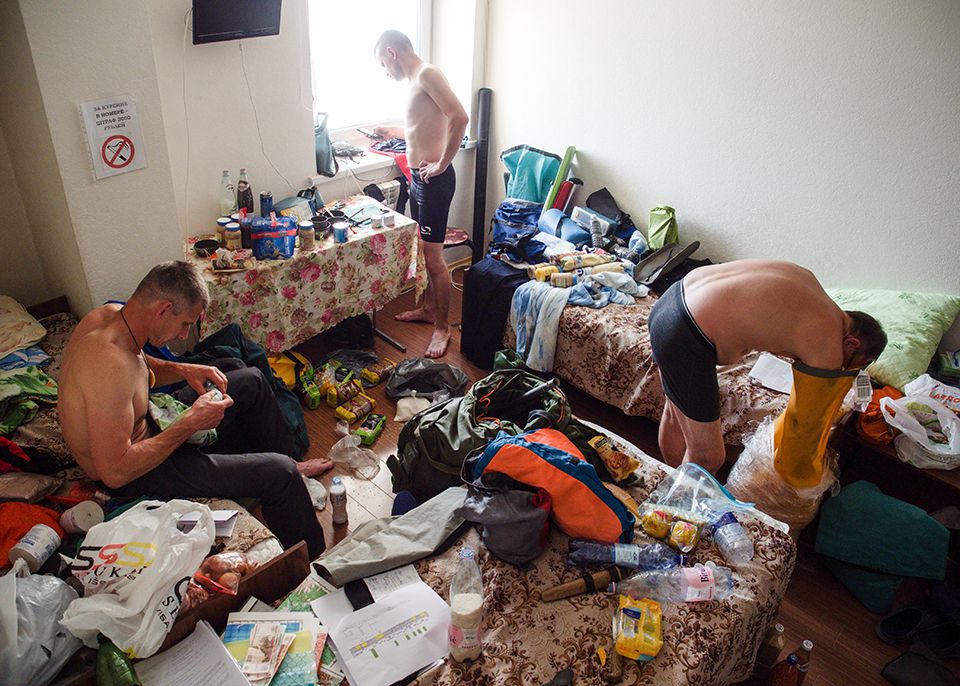
Day 3 (July 3rd)
“Everything’s fine! Turns out that Vigimantas and Viktoras got on the plane at the last minute. We managed to beat the record for fastest run from the check-in to the gate at Domodedovo airport:) We’ve reached Yakutsk.”
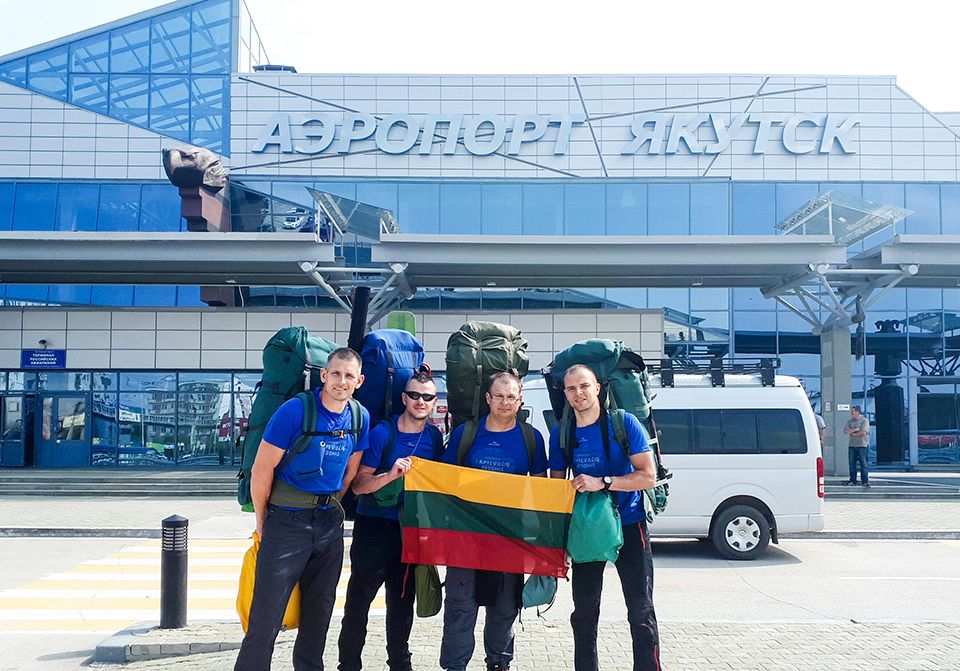
Day 4 (July 4th)
“We’re leaving Yakutsk and travelling to Yana. The Verkhoyansk Range and the Lena River await us, but we’ll only reach the latter in a month. Early best wishes for July 6th!”
“Hello from Batagay-Alyta. We were stuck in the Yakutsk airport for a long time, the plane couldn’t fly due to bad weather conditions in Batagay-Alyta. We’ll look for a lift to the Tumara riverhead.”
“As planned, we took motorboats with deer herders up to where the Tumara River is frozen. Tomorrow we’ll start walking further down the valley.”
“We’re moving according to plan (now with backpacks on our shoulders). After the first day of walking we can just be glad that tomorrow our backpacks will weigh less. :D
The backpacks will keep getting lighter. Today, in the distance, we saw the first deer herders. One of them was riding a reindeer, which looked pretty unusual. Best wishes to everyone!”
“We found an Evenki yurt and a reindeer herd in a beautiful valley. We’re staying next to them, will go eat ram stew (barano troskinio) and freshly baked bread soon.”
“Hello, we’re gradually moving forward. We’ve left the wooded area, tomorrow we’ll cross the pass to Diabdi valley. The mosquitoes keep growing in numbers. Viktoras set today’s record, killing 30 mosquitoes with one strike of his palm.”
“We left the Tumara River valley, having met many deer herders there. When we told them the goal of our expedition, all the elders knew about the Laptevian deportees – they haven’t been forgotten here! Our shoulders are begging for some rest, so tomorrow we’ll try to paddle for 15 km, even though there’s fairly little water in the river.”
“We got in our canoes today and paddled a day’s required walking distance in 3 hours. We visited a deer herder camp on the way. We got a warm welcome and were treated to some homemade bread and venison stew. They gave us some meat for the road – a real feast! We’ll fire up the sauna now, since we haven’t bathed in a week. Tomorrow, the backpacks go back on our shoulders. Wish you well!”
“Woke up this morning from the heat – it was more than 30°C in the tent. It was really hard to walk after a somewhat restful day yesterday. We’ve reached the Bolshoy Syalach Lake, which still has ice hummocks, so it will be “interesting” to paddle/drag our canoes. It finally feels like we’re up north: the temperatures dropped fast, we’re sitting under a dark cloud now, in the pouring rain.
We went fishing in the lake after dinner, reeled in some nice graylings. We pickled some and will use the rest to make fish-soup in the morning. The weather forecast is grim, looks like we’ll be soaking wet for the next few days.”
“A cyclone came in from the Laptev Sea, the temperature is 4°C and will be dropping. The wind blew most of the ice to one corner of the lake overnight, we carried our canoes around it and paddled across the lake. Then we carried our canoes over to the Sakynda River, in which we paddled for 16 km, most of it in a canyon. Tomorrow we’ll see whether to move forward or wait for more favourable weather. Regards!”
“The rain was pouring this morning, we got out of the tent at around 10 o’clock. The mountains are obscured, it would be difficult to navigate. It’s raining a little, 2°C, so we’ll spend the day resting.”
“We made good distance today. The weather continues to be bad – 1°C, wind and rain. We plan to get to another river valley tomorrow. We’re moving ahead, everything’s fine.”
“The situation hasn’t changed. We’re moving along well in the cold, but the weather so far is totally shitty. The sky cleared up a little, but then the clouds came again, 100% humidity, like in November.”
“We have travelled 230 km since the start. Now begins the hardest part – getting over the Verkhoyansk Range. Wishes for better weather have reached us – we saw clear skies today!
You can now wish us endurance. Tomorrow we’ll get closer to our pass, located at 1.5 km elevation. The day after tomorrow we’ll storm it and be on the side of the Lena River. Best wishes to everyone and thanks for the support!”
“This morning, we saw a bear heading down to the river. We kept an eye on him, he later went up the valley. We reached the end of the valley without any repeat meetups.
Right now, the wind rages with sleet. Everything looks like the landscape of Mars – just rocks and scree in sight. Only patches of snow and moss provide signs of life. If the weather is good, tomorrow we’ll storm the pass. Wish everyone well!”
“Things are as should be at the pass – Darius made snow cones, the skies gave us plenty of sleet, we descended a pretty scary passageway – would be hard to make it even more difficult. But we’re doing well, eating a festive dinner – a culinary surprise from Montis Magija. Everything’s great!”
“Friends! It is great to read your messages of support – THANK YOU! Today we started paddling in resort-like conditions – not a cloud in sight. We whipped ourselves with leaves in the sauna and grilled the Siberian ibex ham that the deer herders gave us. We feel elated!
The deer herders were from Kyusyur. When Gediminas told them that his father was born there, the eldest looked surprised. Its good we had a copy of the birth certificate to prove it. We talked, exchanged gifts. Tomorrow we’ll move on, the river is getting very narrow between mountains. Best wishes!”
“We’re getting a lot of mileage out of our canoes – paddled more than 60 km in 3 days. Today we saw what a real mountain river looks like. It had squeezed into a narrow pass for about 15 km (the canyon walls were almost 100 meters tall!) The rapids became more powerful and completely drenched us.
Sadly, resort-like weather tends to end quickly, we spent the last day in rain. But we’re moving faster than planned, everyone in our team is healthy and we feel great. Greetings to everyone!”
“We visited an abandoned weather station in Sachandza. All the equipment and a bunch of film were left behind. We read Gorbachev’s statement on Perestroika’s accomplishments in the 1988 Pravda newspaper. We plan to finish our trip down the river in Besiuke, then we’ll put on our backpacks again and travel to Kyusyur.”
“It was a hard day. We walked to the last river through a swampy, grassy taiga. The land was hilly, so our walking speed dropped. But we should be done with the walking part tomorrow.
We’re warming up by the fire, because it’s been raining for 24-hours straight. The temperature is a standard 5°C. Anyway, we’ve had better days:D Say hello to everyone!”
“The walking part of our expedition ended in many contrasts. We travelled through a real taiga, full of dwarf birches and cedars. But the second day we finally reached a lake with a great camping area and water full of graylings.
The lake gifted us large graylings and a filling dinner. Having rested, we finished walking and paddled about 35 km down a river. Lena isn’t far now!”
“Finally! Yesterday we reached Lena after 30 days and more than 500 km! We saw with our own eyes what the deportees-laptevians had witnessed and later described in their memoirs. It’s hard not to agree with them – the landscape is unforgettable and grand, rousing fascination, but also leaving some feeling of discomfort. Here, the Lena waters squeeze into a channel just 3.5 km wide, and travel at a powerful torrent to the Laptev Sea. It is a formidable element, humans can only adapt to it. We planned to camp by the Lena River before reaching Kyusyur, but a really strong southwest wind was blowing. Vigis tried to fly his power kite, we attached our canoes and set off sailing downriver. We covered 20 km in almost 2 hours and reached Kyusyur – a small fishing village. We’ve successfully ended the trekking and paddling part of our expedition, now starts the following stage! Best wishes to everyone!”
“The initial distrust that the inhabitants of Kyusyur felt towards us immediately disappeared once we explained the goal of our expedition. We were greeted warmly, the village administration helped us find lodging – a little house with a lavatory. Kyusyur is a poor fishing village on the Lena River bank. The river is the only thing that connects it to the outside world. Right away, we heard stories about the deportees and their children who lived here. We met one Lithuanian man’s daughters, fixed up the monument for victims of political repression, which was recently built by the local government. We also crossed the river to Bulun, but found only ruins there. Tomorrow we’ll move closer to the Laptev Sea. We don’t know what awaits us in Tit-Ary. We just know that we’ll spend almost 2 weeks there, until the next steamboat going to Tiksi arrives.”
“In Kyusyur, we tried to collect as much information as possible about the deportees who lived here. A few of the village elders told us what they remembered. The retired school principal showed us a photo album celebrating the 100-year anniversary of the Kyusyur High School, which had many Lithuanian, Finnish and German names in it. Gediminas found a photo of his grandfather, Alfonsas Andriukaitis. We left a note at the bottom of the teachers group photo about the deportee from Lithuania who worked as a chemistry teacher in 1953-1954.”
“As we got closer to Tit-Ary, we understood what the locals had meant about Kyusyur being a resort compared to Tit-Ary. Ice on the shores and stormy winds warned that life in tents wouldn’t be very comfortable. We disembarked in Tit-Ary at 2 PM and were surprised to find a village full of life. Jegeris took us to the most important person on the island – Aleksey. Turns out that part of the island and 60 km of the Lena River are his family’s fishing grounds. We were hospitably and warmly greeted, and given a cozy log cabin to stay. We settled in after having tea with Jeger. Our stay in Tit-Ary has begun.”
“Our idea of life in Tit-Ary couldn’t have been more different from the reality. We expected to find an abandoned fishing base and a few poachers, but met a crew of fishermen run by two young guys. A new fish processing plant is being built on the riverbank, they have internet and satellite TV at home, and are planning a 9-room guest house for tourists… We were really surprised. When we told them about our plan to clean up the Tit-Ary cemetery, the men gave us encouragement and politely offered to help.”
“Tit-Ary island is full of reminders from World War II and the deportations. There’s a decayed Studebaker truck on shore, a pile of old fuel tanks left over from when the US transported aid to the soviets across the Lena River (the Lend-Lease policy). Out of around 20 buildings located on the island, at least a few were built during the period of deportations – a little old house, and an unused but still functioning ice house dug by deportees. Huge areas of land where turf was dug up to insulate the barracks and yurts are still visible in the tundra.
We’ve been working in the cemetery the last few days. We buried coffins that were uncovered by the wind, rebuilt fallen crosses. Time has inevitably affected the cemetery, its falling into decay, but both monumental crosses are still standing. Our main task now is to reinforce the foundation of the stone monument. It won’t be easy – we need to bring about 15-20 tons of sand, another couple of tons of turf, which we’ll use to cover the sand foundation from the wind (there are no other suitable materials on the island). And we’ll do it all manually. The weather is pretty good so far, we’re moving along.”
“Southern winds brought smog and 24°C heat from the burning taiga. So, we opened the bathing season in the Lena River after work. However, it looks like summer across the polar circle will end tomorrow, with temperatures dropping to 6°C during daytime. Local fishermen helped us out a lot with equipment and materials: we got planks, a chainsaw and a four-wheeler. We used the latter to bring turf needed to cover up the sand mound. Just a few more things left to do until our mission in Tit-Ary is over. We already feel like coming home.”
“Yesterday was unbelievable, us locals ended the day riding in the Lena River on a… jet ski taken out of the garage. They use it 2-3 times a year, and it’s the only jet ski in all of North Yakutia, which isn’t hard to believe. Today everything was as should be: the fishermen returned to their nets, the temperature – to its typical 6°C, and we finished fortifying the monument. Tomorrow we’ll celebrate the end of our work here. To thank the local fishermen for their help, we’re assisting them in building a house that can be dragged on a sledge, used to fish riapushkos in the autumn. We are treated with local fish almost every evening. Anyway, everything’s going great so far.”
“Our work on Tit-Ary island is done. We spent almost 5 days working on the monument, building two frameworks which helped form the sand mound. We hammered poles into the mound and intertwined them with switches (like in our sand dunes). Then, we put turf into the web we’d formed. Our work resulted in a verdant mound which will hopefully hold the unstable sand for a few years.”
“We visited two historic Tit-Ary buildings today – the brining factory (zasolka) and the ice house (lednik). The shop-floor still has the old brining barrels that Staugaitis told us about. Of course, now the location is used as the company’s warehouse and there’s no fish stored there. However, the floors and walls of the old ice house were recently flooded, it was cleaned up and now fish is stored there in bags until it’s taken away. It’s a huge chamber with two underground floors. The temperature on the first floor is -5°C, and on the second a whopping -15°C. After walking underground, it feels like a wave of heat hits you outside (even though its only 6°C). Overall, the permafrost in Tit-Ary starts 1.5 meters down. That’s why all the buildings on the island have no foundation, even the new ones are built on metal structures laid on the ground.”
“Yesterday we went seine fishing (nievad) – a method also used by the deportees who lived here. The net encircles a large portion of the river, forming a ladle of sorts, in which the fish are dragged to shore. It was the first time this year that the team of young fishermen used seines, since they’re mostly used in the fall, during cisco season. The training went “well” – the net line got caught in the boat’s propeller, and later the crane that was dragging the line to shore broke. There was still 30-40 kg of fish left in the net. After everything was finished, we decided that Vitalis Staugaitis would’ve caught more. But the local fishermen took their failure as a valuable lesson before the fall season. In the evening, Aleksey brought us across the river, where we climbed a mountain to take photos of the impressive Tit-Ary and the Lower Lena River scenery.”
“The Tit-Ary landlords invited us to come along on their visit to see some acquaintances in the Samoylov research station. We took a speedboat past Stolb Island, once the location of a prison. Today there’s only a stunning rock, over 100 m tall, like a lighthouse to ships cruising the Lena Delta. The Samoylov polar research station now hosts an international team of Russian and German scientists, students from Switzerland and France were also visiting at the time. The station, which was built for international scientific research, can comfortably house up to 30 people, has laboratories, recreation and conference rooms, internet access. According to our guide, it is the best-equipped research station in Russia, and one of the top five arctic stations in the world. We can’t argue with that – the place is impressive.”
“Our last day in Tit-Ary. We’re leaving this wintry territory that nonetheless greeted us in a friendly and hospitable manner. Even though we didn’t become close friends with Aleksey and Artyom, we gave each other a helping hand and sat at the same table many times. The living conditions in this land encourage people to find common ground and help each other out, putting aside cultural or political differences. You won’t last long here by demonstrating arrogance or pretending to know everything, and will therefore fail to achieve anything on your own. That is our takeaway from Tit-Ary. We completed our main task and are already waiting for the “Mechanik Kulibin”, arriving tonight from Yakutsk. Hopefully, it will get us to Tiksi on time. The final stretch of our expedition is starting – the journey home.”
““Mechanik Kulibin” successfully brought us to Tiksi. The ship was built in East Germany in 1955 (the locals simply call it “bielinkij”). It’s still the main thing connecting settlements in the Lower Lena River to civilization ("materik"). Just travelling aboard this ship is an adventure – Vigis said he feels as though he were on the Titanic. Good thing our trip had a happy ending. We were met in Tiksi by Tit-Ary landlord Aleksey’s father. A short trip around the city and its surroundings ended with a swim in the Laptev Sea. He said that the water was about 4°C, but it didn’t feel too cold.”
“We continue to feel the hospitality of northerners. There was no need to find a place for our tent in Tiksi. Aleksey’s parents let us stay with them, treated us to a meal, and shared stories about Tiksi. The town that thrived during Soviet times leaves an oppressive feeling. Out of 15 000 inhabitants that once lived here, only 4500 remain. The streets are empty, the infrastructure is failing – the former military town looks post-apocalyptic. The future of the harbour, which lost its strategic military advantage, is unclear. However, according to the locals, the number of tourists coming to see this apocalyptic landscape gets bigger every year. Maybe Tiksi will become a hot spot for westerners searching for exotic locales, and will one day rely on tourism to survive…”
“This journey delighted us with one more pretty incredible event. While we were waiting for our flight from Tiksi to Yakutsk, an old Yakut man saw a small Lithuanian flag on Vigis’s backpack and approached us, carefully asking whether we’d visited Tit-Ary. We said yes, starting a conversation that lasted until we’d reached Yakutsk. Turns out this man’s name is Tomas Simokaitis – his father once came here, married and gave his son a Lithuanian name. But that’s not even the most incredible part. What’s more remarkable is that Tomas is an archaeologist who visited Tit-Ary in 2009. After walking around the island, he tied a Lithuanian flag around the monument’s pipe in honour of Lithuanian deportees. That was the same faded and tattered flag we’d seen on the monument and wondered who could’ve put it there. That person was Tomas. He was very glad to know that the flag is still hanging on that monument after all these years. What an extraordinary coincidence and a wonderful acquaintance.”
“The course of our journey back is clear. Tomorrow we’ll fly to Moscow, Monday night we’ll take the train to Minsk, reaching Vilnius Tuesday morning at 9:30 on the Minsk train. A few more long days left, even though we’ve already been thinking about home for a while…”