
Raising the Cross
'When I started packing my stuff, my wife came up to me and said: “I strictly forbid you to go on this expedition. You spent eighteen years in banishment, and the NKVD will add you ten more for this.”' deportee Vitalis Staugaitis heard these words almost thirty years ago, but remembers them to this day. On that day, he listened to what his spouse had to say and silently went to another room. He sat down by the table, took a sheet of paper and wrote: 'Consent. If Ona Staugaitienė files for divorce, I, Vitalis Staugaitis, will agree with all conditions and will not sue her in return in any way.'
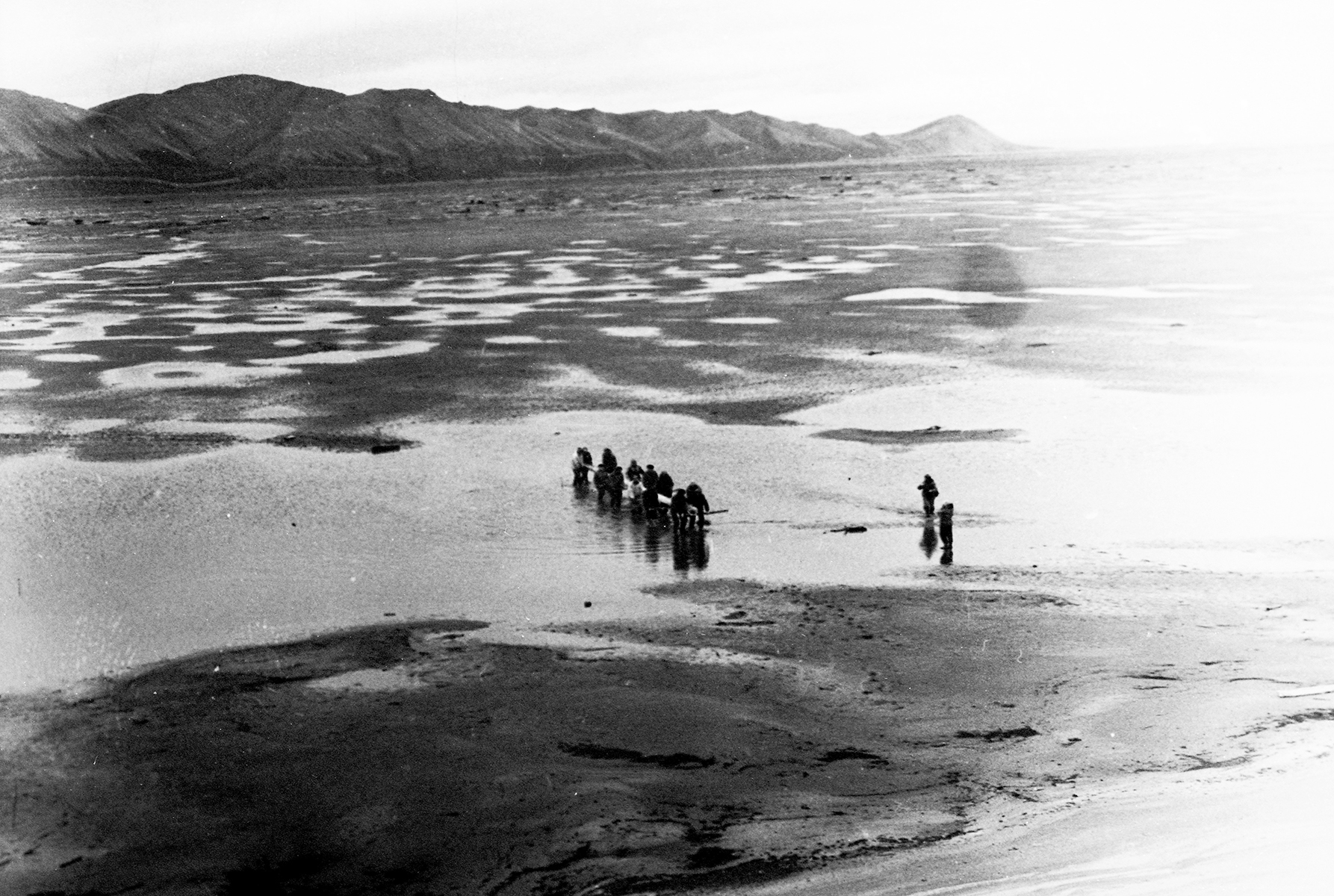 Expedition “Lena ‘89”. Carrying the cross. Tit-Ary, 1989.
A durable connection
A large crowd gathered around the Freedom Monument in Kaunas. People from all over Lithuania gathered to see off 'Lena 89', the first Lithuanian expedition to the Laptev Sea region. Their compatriots had been banished there a long time ago. Some people in the crowd had handfuls of their native soil with them. The plan of the expedition included building four monuments, and the people wanted to make sure that at least a tiny part of Lithuania would reach their friends and family who died in Syberia.
Among the fifteen people who comprised the main group of the expedition, led by Rimantas Plėštys, stood Vitalis, concerned and anxious. No matter how hard he tried to convince himself that he had no choice, his thoughts would still come back to the note he left to his wife. He kept watching the crowd expectantly. And, suddenly, he saw that for which he was looking. Ona came to see off Vitalis and told him to take good care of himself.
Bringing back from the banishment
Members of the expedition spent more than a month working in Syberia. Every day and, quite often, night, they were building monuments of concrete, stone, and titanium on the capes of Bykov and Muostah and on the islands of Tit-Ary and Trofimovsk. The Lithuanian crew was also fixing broken crosses and digging out and bringing to safety the remains of the deportees, scattered around in the concrete-like permafrost. Part of the remains came to Lithuania in a special container and were reburied in the Homeland. 'Not all are brave enough to write about what we saw and experienced while unearthing the remains that were brought back to Lithuania. The coffins were full of ice and soil, and were more like solid monoliths, weighing hundreds of kilos,' wrote expedition leader Rimantas Plėštys.
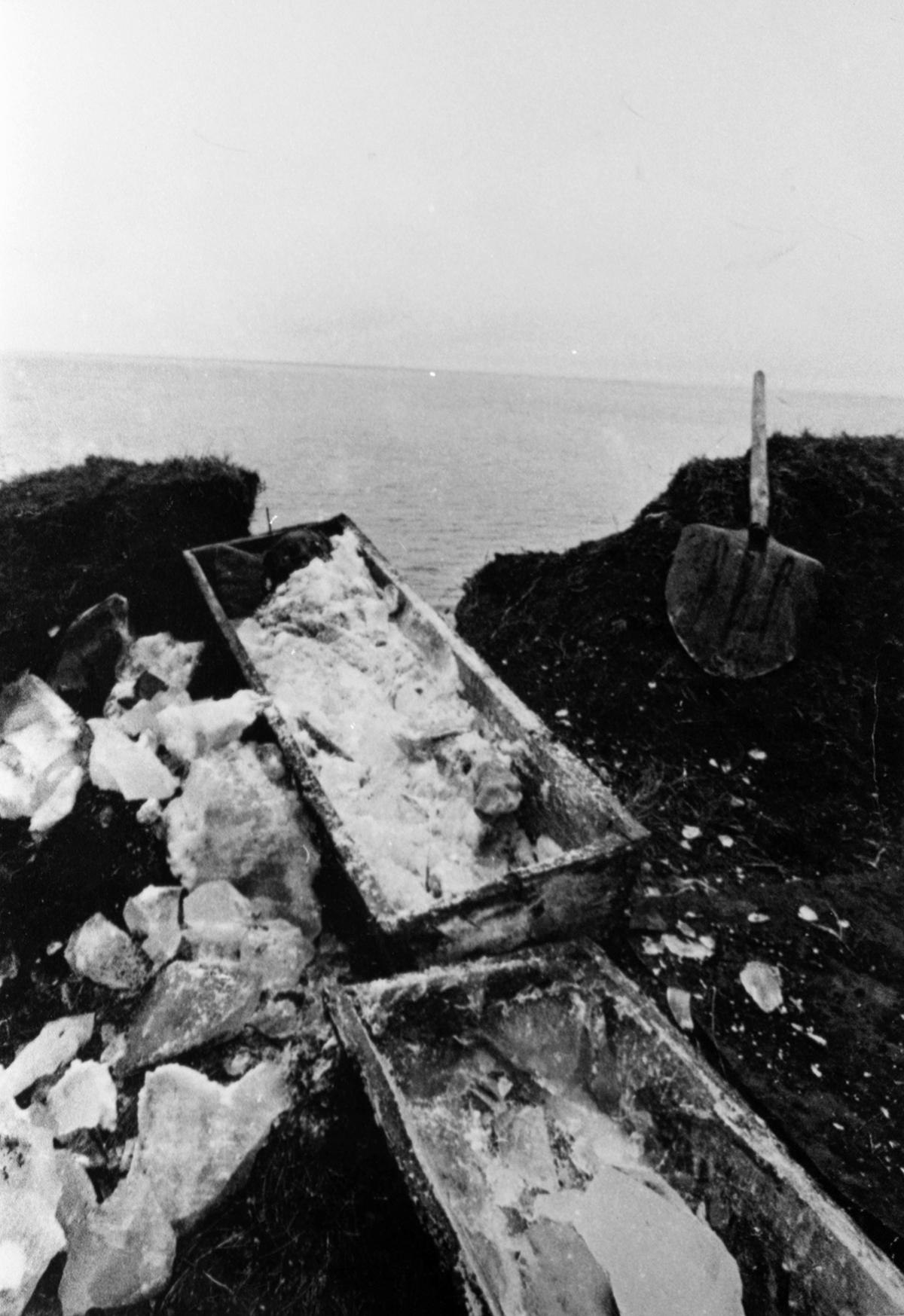 Unearthing the remains at the cemetery. Bykovsky Cape, 1989.
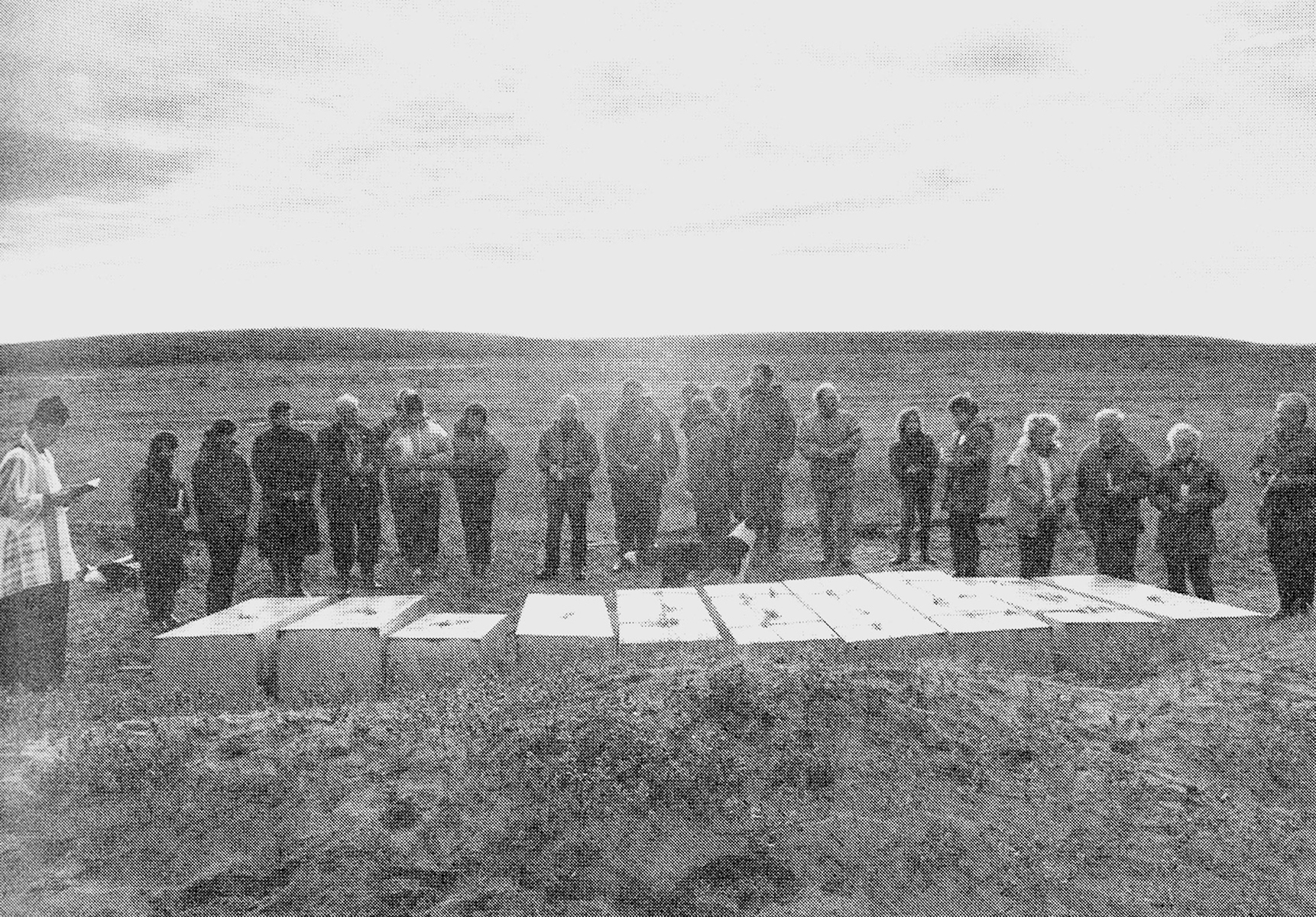 Bringing home the remains. Trofimovsk, 1989.
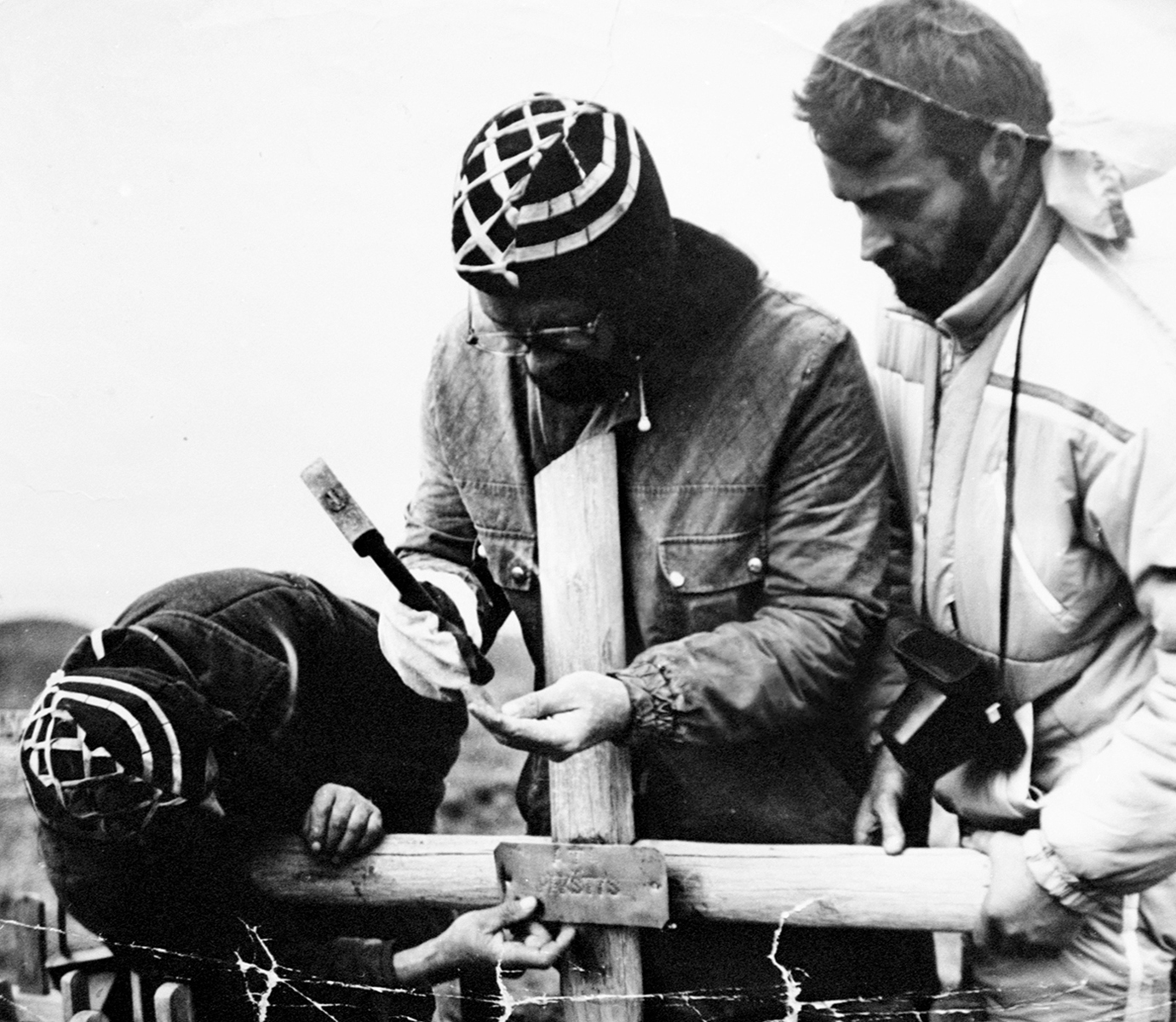 Repairing the Lithuanian exile cemetery, and building a cross for Vytautas Pakštys (1924-1945). From the left: Vitalis Staugaitis, Aleksandras Ambrazevičius, Kastytis Leščinskas. Bykovsky Cape, 1989.
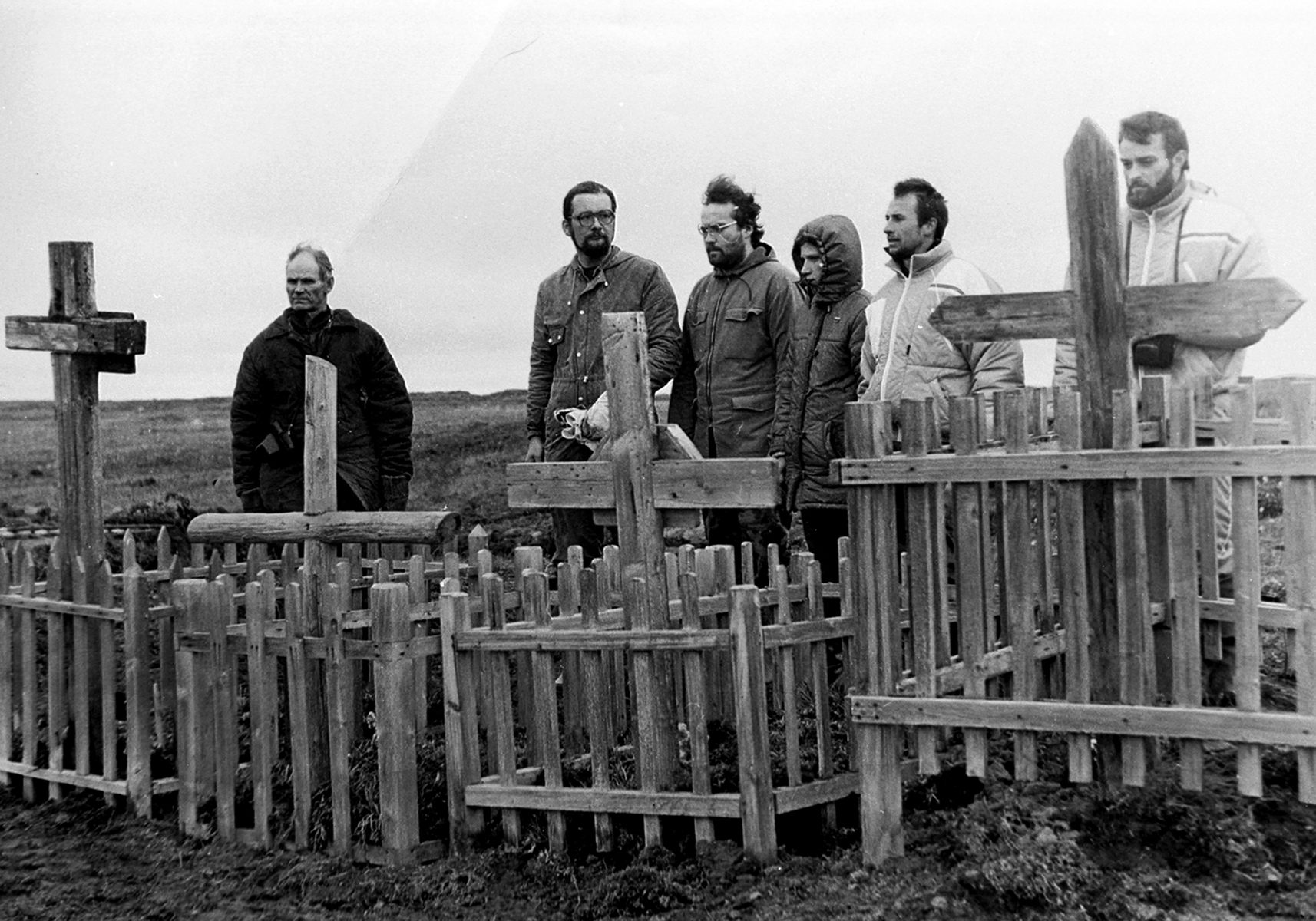 The repaired cemetery. Expedition participants, from the left: Vitalis Staugaitis, Aleksandras Ambrazevičius, Algirdas Lipštas, Jonas Sarapinas, an unknown man, Kastytis Leščinskas. Bykovsky Cape, 1989.
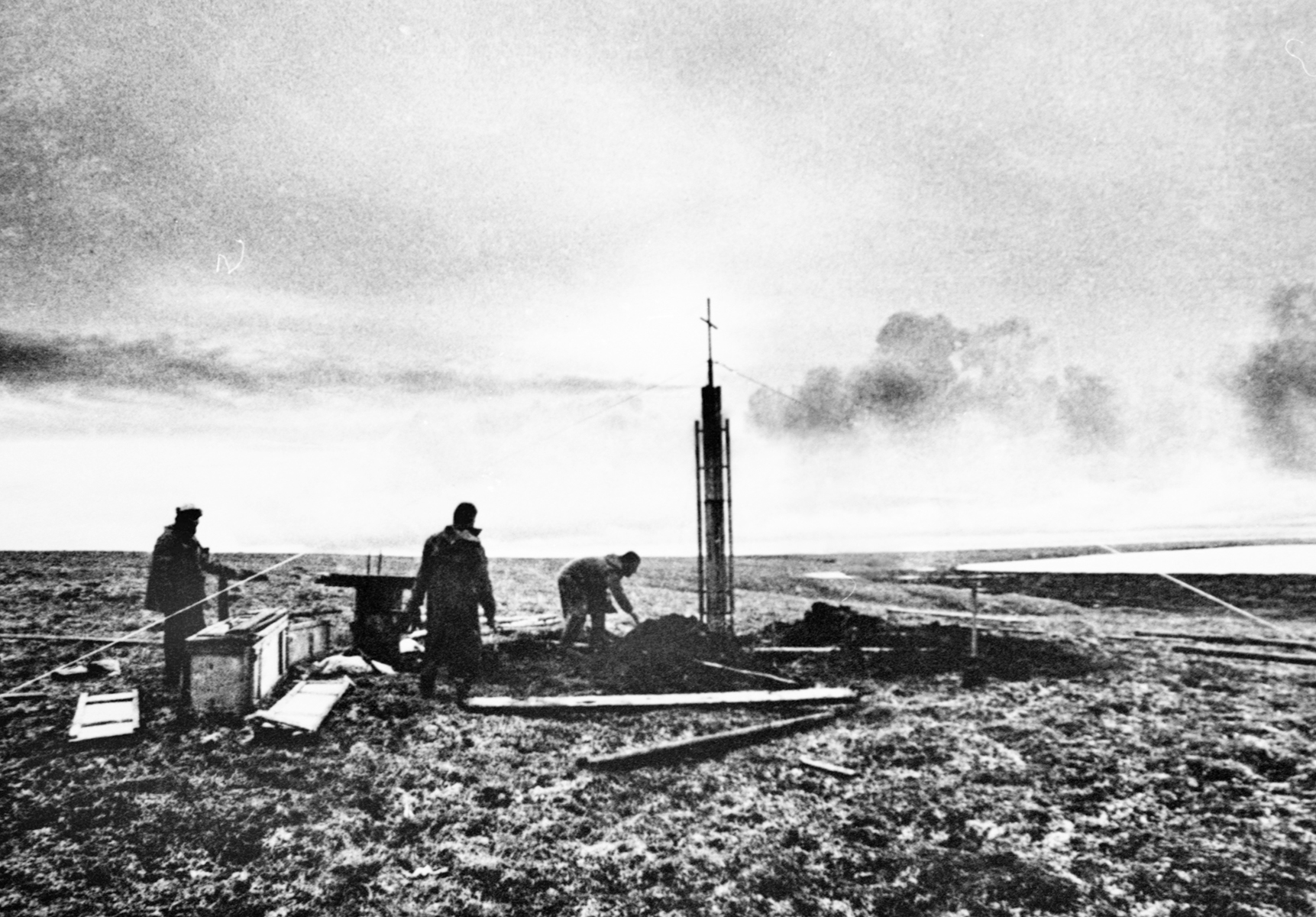 Building a cross to commemorate the exiles. Muostah, 1989.
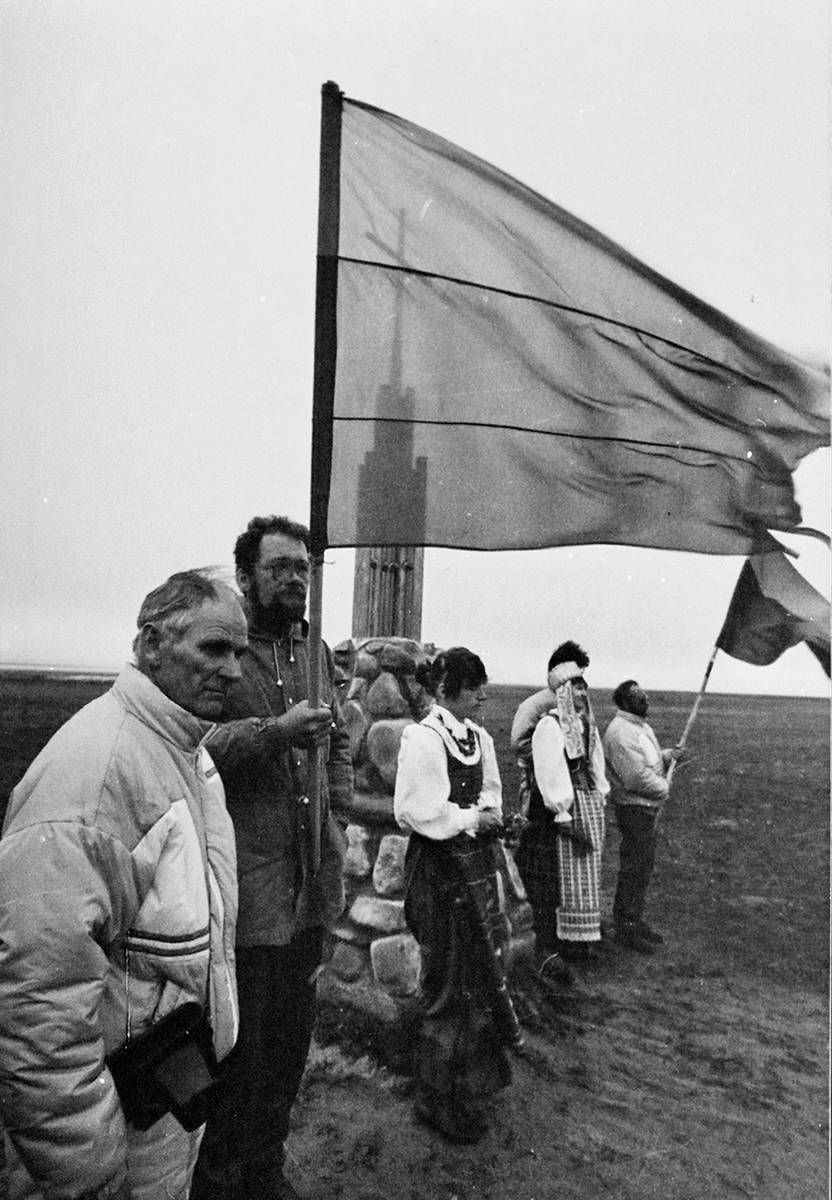 Next to the monument. From the left: Vitalis Staugaitis, Aleksandras Ambrazevičius, Daina Juškienė, Ona Rudalevičienė, behind her – Regina Stasenytė, Jonas Serapinas. Muostah, 1989.
Short memory – a cause for regret
Despite much support before the expedition, its coming back from Syberia was a very silent one. 'Lithuania did not acknowledge. It could not acknowledge, as we were under the Russians back then. Deeds like that encourage the nation, and the Communist government didn't need that. It's a pity that even after regaining the Independence, the members of the expedition have not been acknowledged, despite the fact that that was the first expedition to Syberia,' shrugs Vitalis Staugaitis.
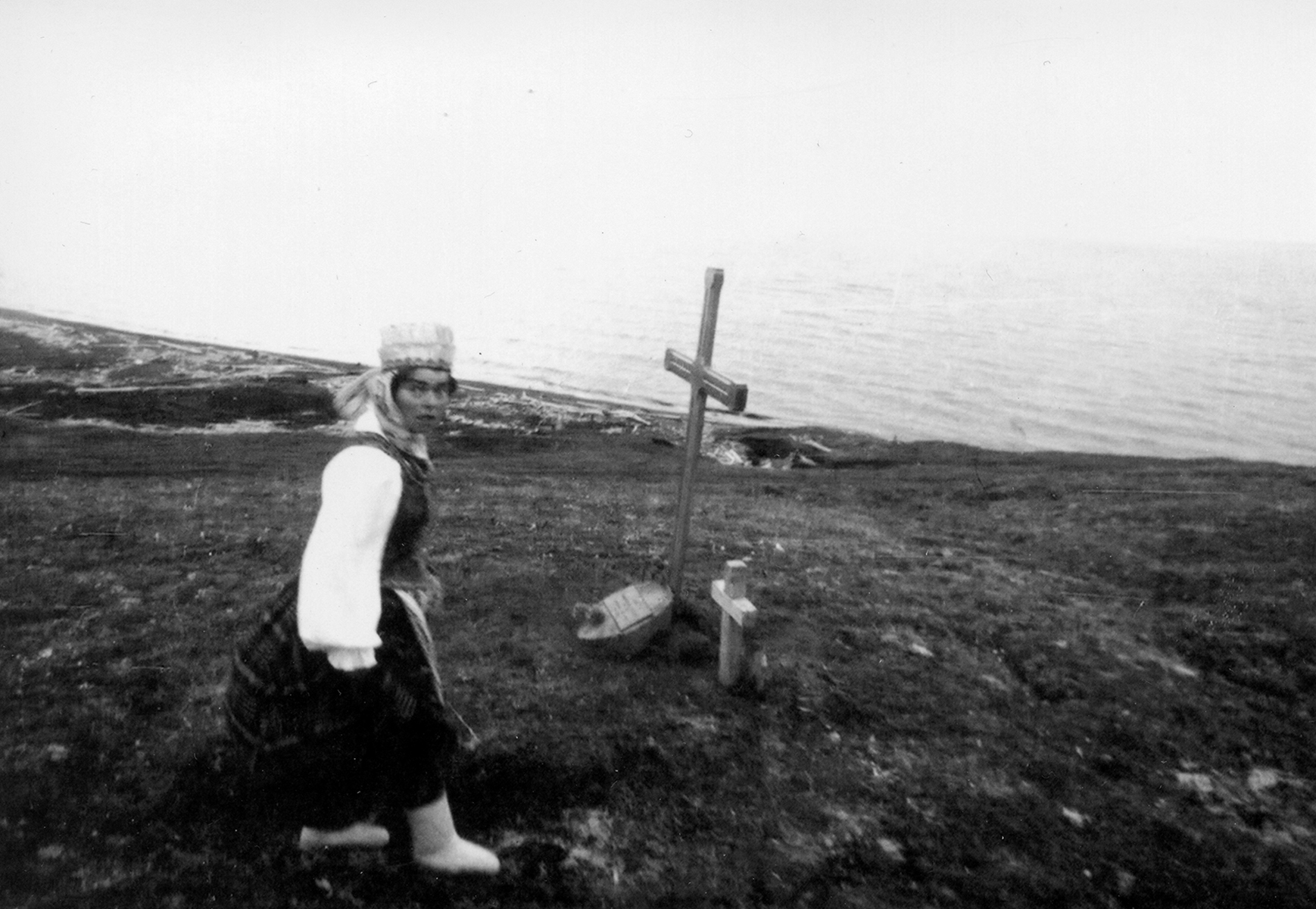 Pictured – Ona Rudalevičienė. To her right are the crosses marking the graves of Janina (Elžbieta) Adamkevičiūtė-Linkevičienė and her son, Kęstutis Linkevičius. The small cross was made from oak, flown over on a plane from Lithuania and built by Vitalis Staugaitis. Muostah, 1989.
